Ezerfoods — Research-Led Design for a Food Delivery App.
Problem
Having access to fresh, quality, and affordable fruits and vegetables in Accra is quite a hustle. Buyers mostly purchase from vendors that sell by the roadside or from market women in busy market centres, whose sanitary conditions are usually below average.
The produce bought from these sellers, though not usually fresh, is relatively affordable. The fresh, quality fruits and vegetables on the other hand, are sold in supermarkets and are quite expensive.
This leaves the majority of buyers who cannot afford to purchase from supermarkets with the options of buying from a street vendor or from the market.
Proposed Solution
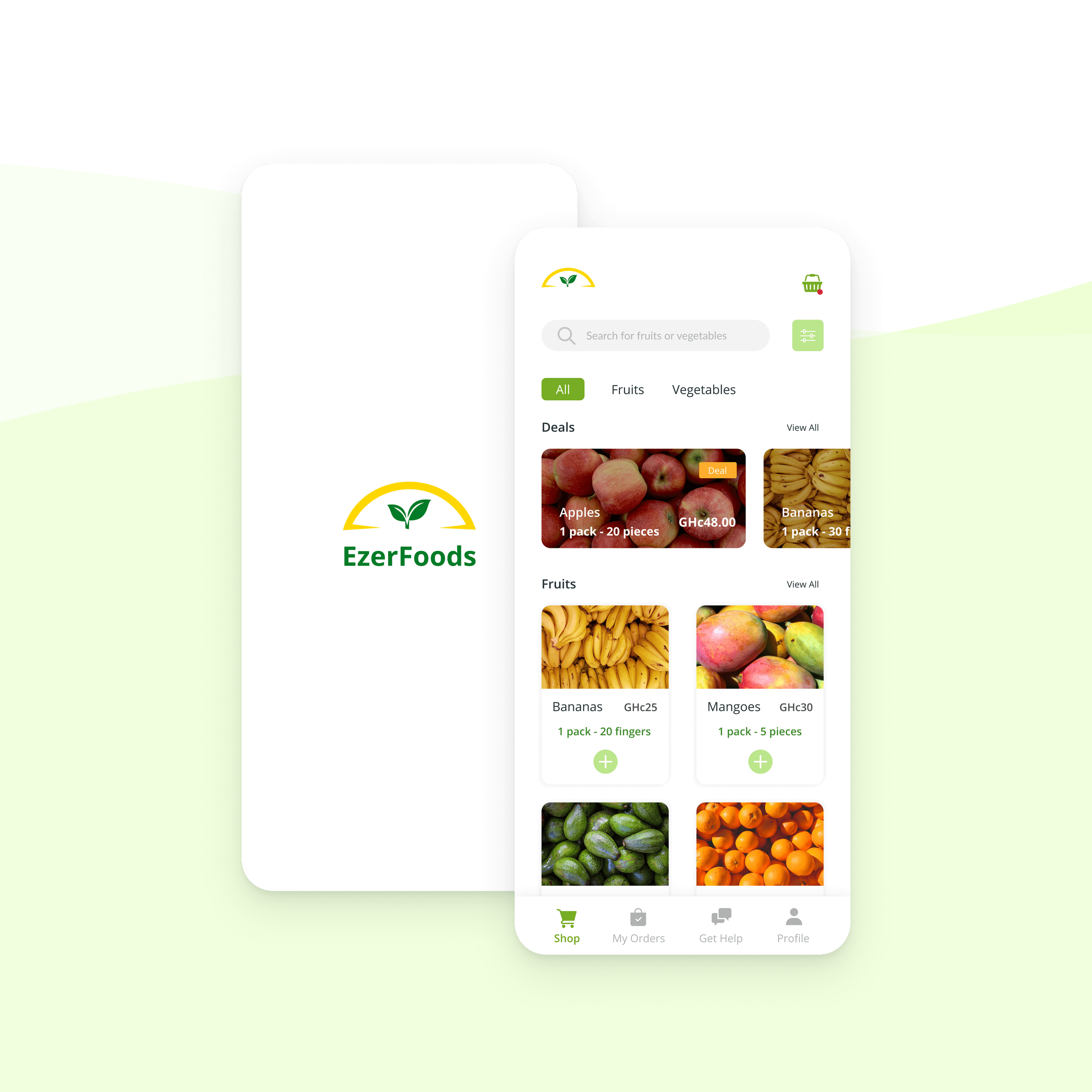
A mobile and web app that allows users to buy fresh produce online. The purchased fruits and vegetables are either delivered to the buyer's preferred location or they are picked up by the user.
Business Goal
The vision of Ezerfoods is to connect both wholesale and retail buyers and consumers to farmers. They do this by acting as the middlemen. Ezerfoods aims to purchase the produce from the farmers and sell them to buyers through their online platform. Their goal is to have a simple but functional web and mobile platform where buyers can order the produce they want and have it delivered to them or picked up by them.
Target Audience
- Retailers (grocery shop owners, food vendors, and street fruit vendors) who have access to internet and phones or computers
- Wholesalers who have access to internet and phones or computers
- Consumers who buy in moderate quantity and have access to internet and phones or computers
Design Process
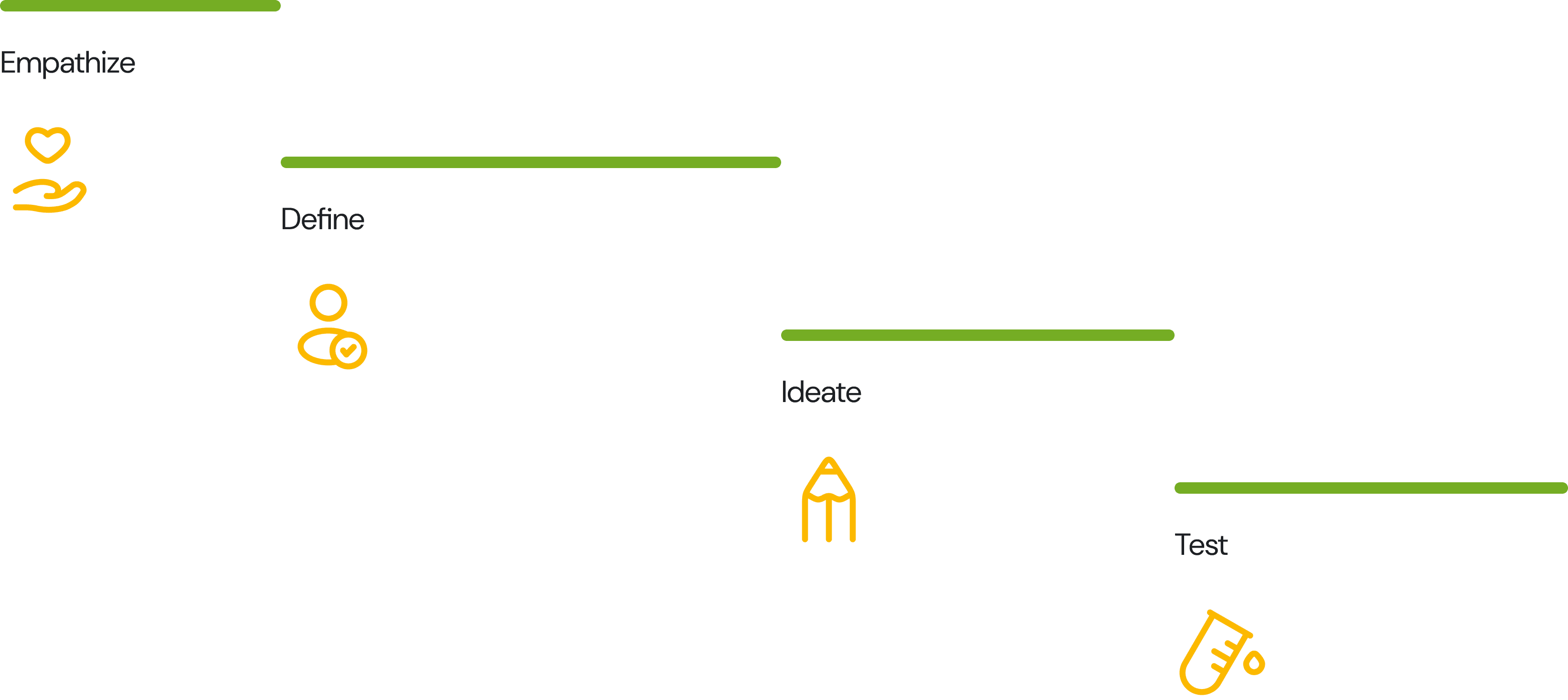
Empathize
I conducted research to better understand user needs.
Qualitative Research
10 users were interviewed over the phone and in person to understand the challenges they face when it comes to buying fresh fruits and vegetables. A sample of the interview questions is listed below:
How do you purchase your produce?
What matters to you most when buying produce?
Do you trust that the produce you buy are from hygienic sources?
What is your biggest challenge when purchasing produce?
Do you use any platform to purchase produce online?
Do you use any delivery service for buying foodstuff?
Insights From The Interviews
Retailers mostly purchase from street vendors or the market. Some of them have the street vendors deliver it to them in their homes.
Wholesalers purchase from other wholesalers or from farmers directly.
Buyers face challenges of purchasing produce that has gone bad or will soon go bad. They also face the challenge of high prices, not getting the produce they want at a particular time, and buying from unhygienic places.
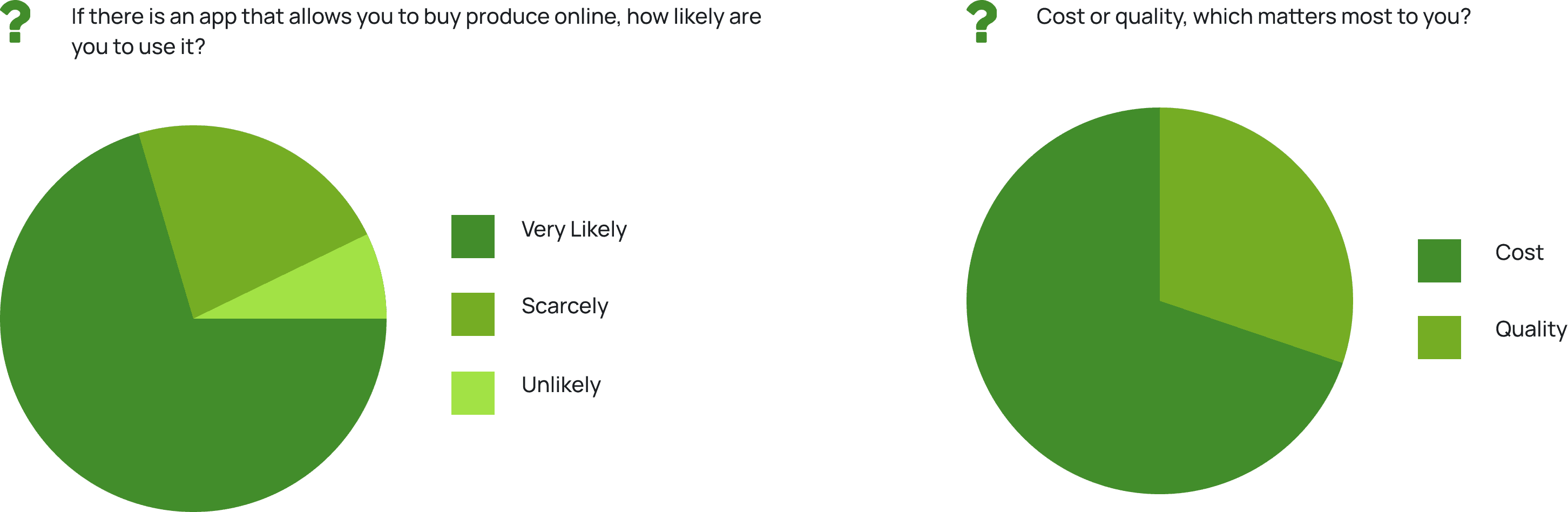
Freshness and quality matter to buyers more than cost. They are willing to pay more if they will get hygienic, healthy produce.
Buyers do not have any platform they use to buy the produce. They depend on phone calls and texts.
Wholesalers use delivery to get the food from either farmers or other wholesalers. Retailers go to buy the produce themselves.
Quantitative Research
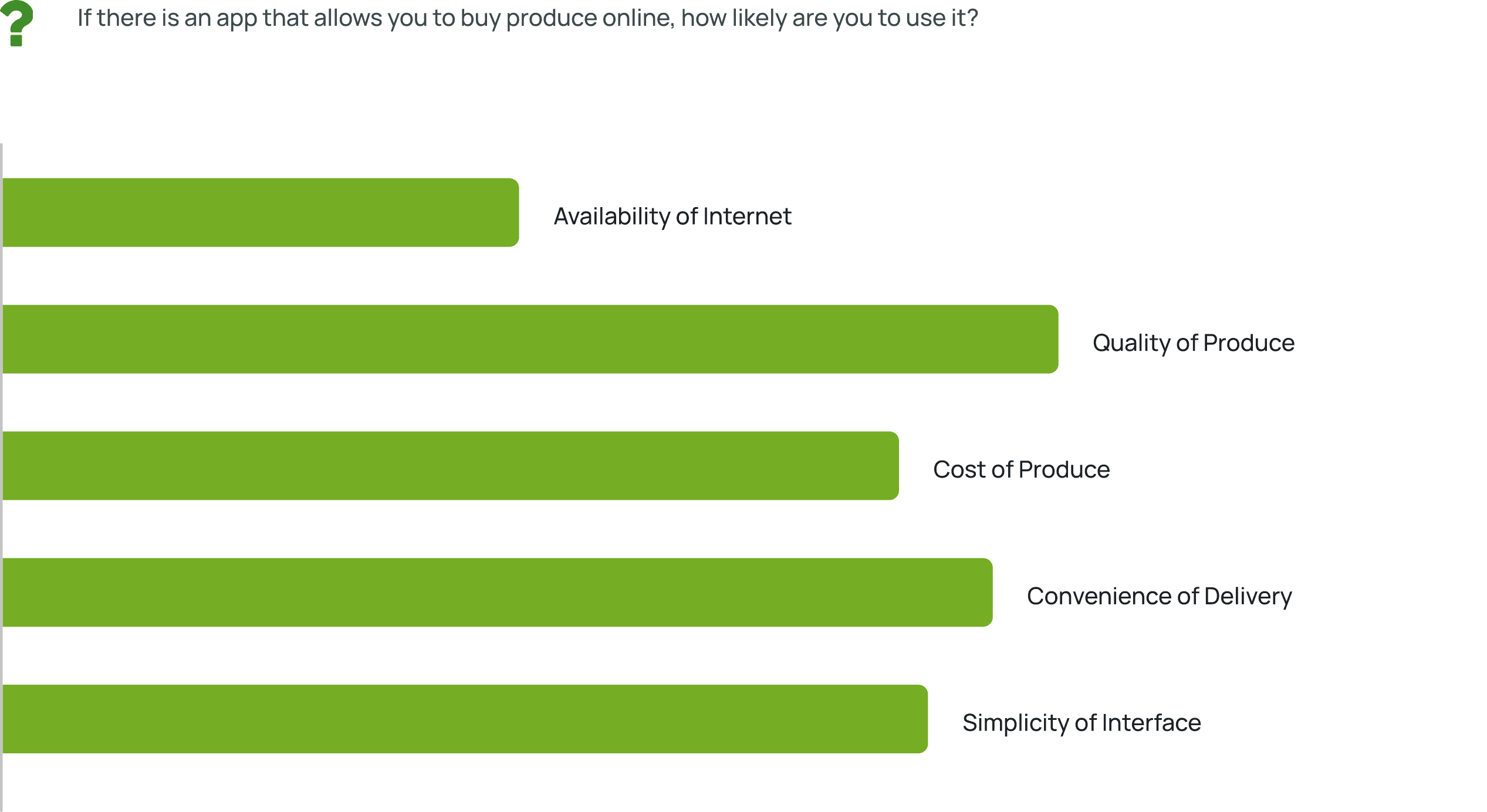
I conducted surveys to further understand the user and observe shared patterns among users.
Define
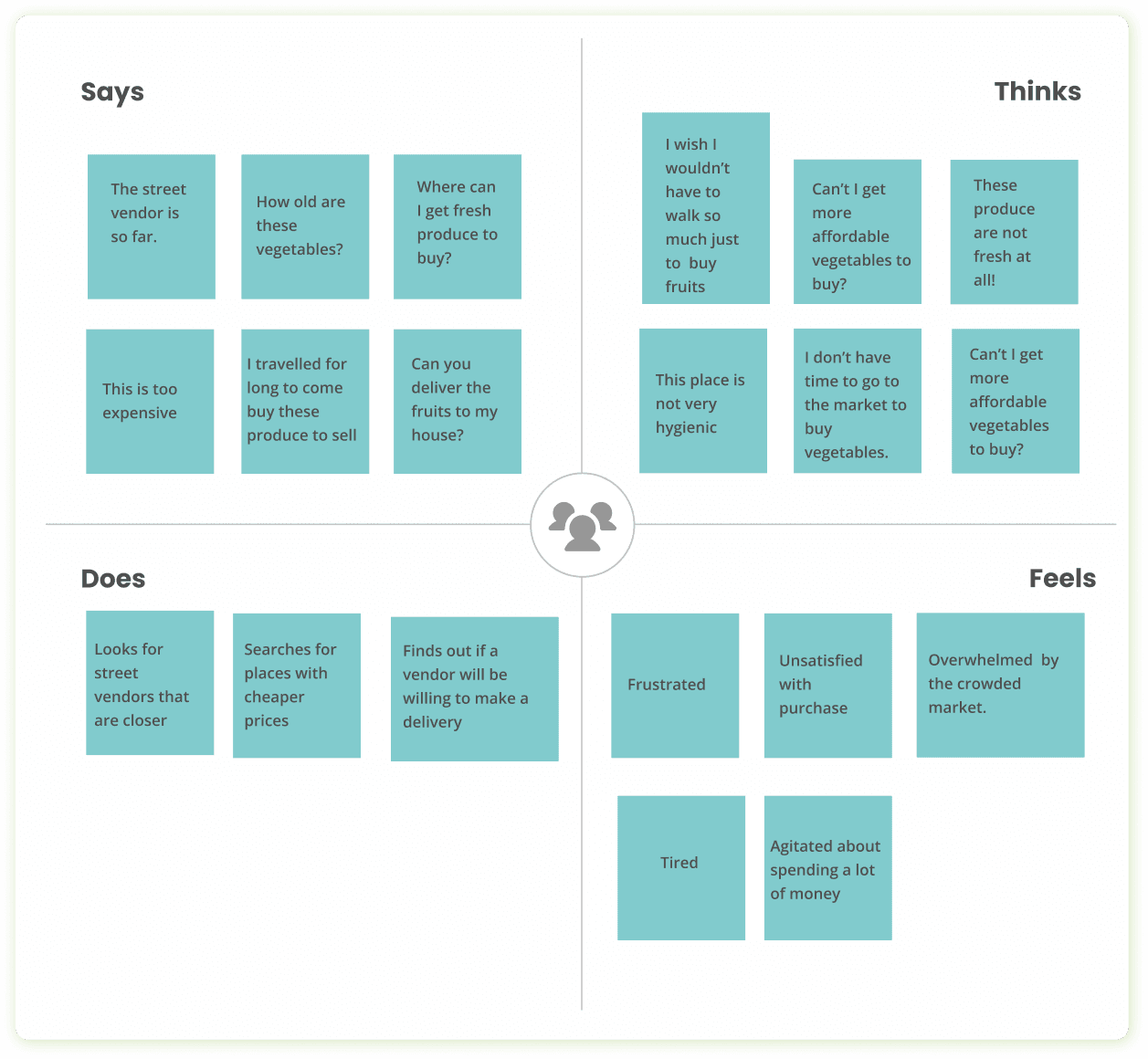
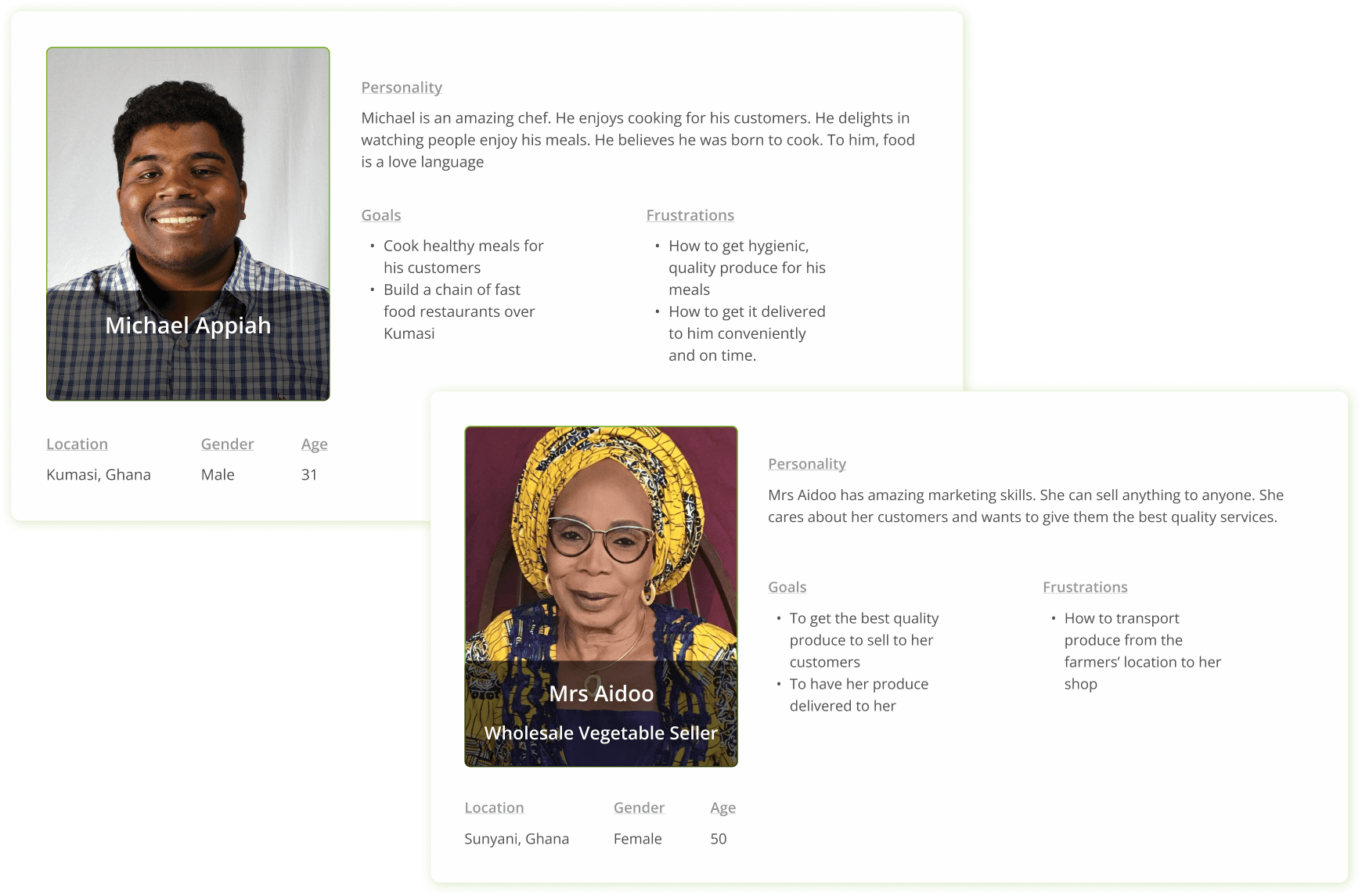
I used data collected from the research to create an empathy map and personas that represented the major categories of users.
Empathy Map
Personas
Ideate
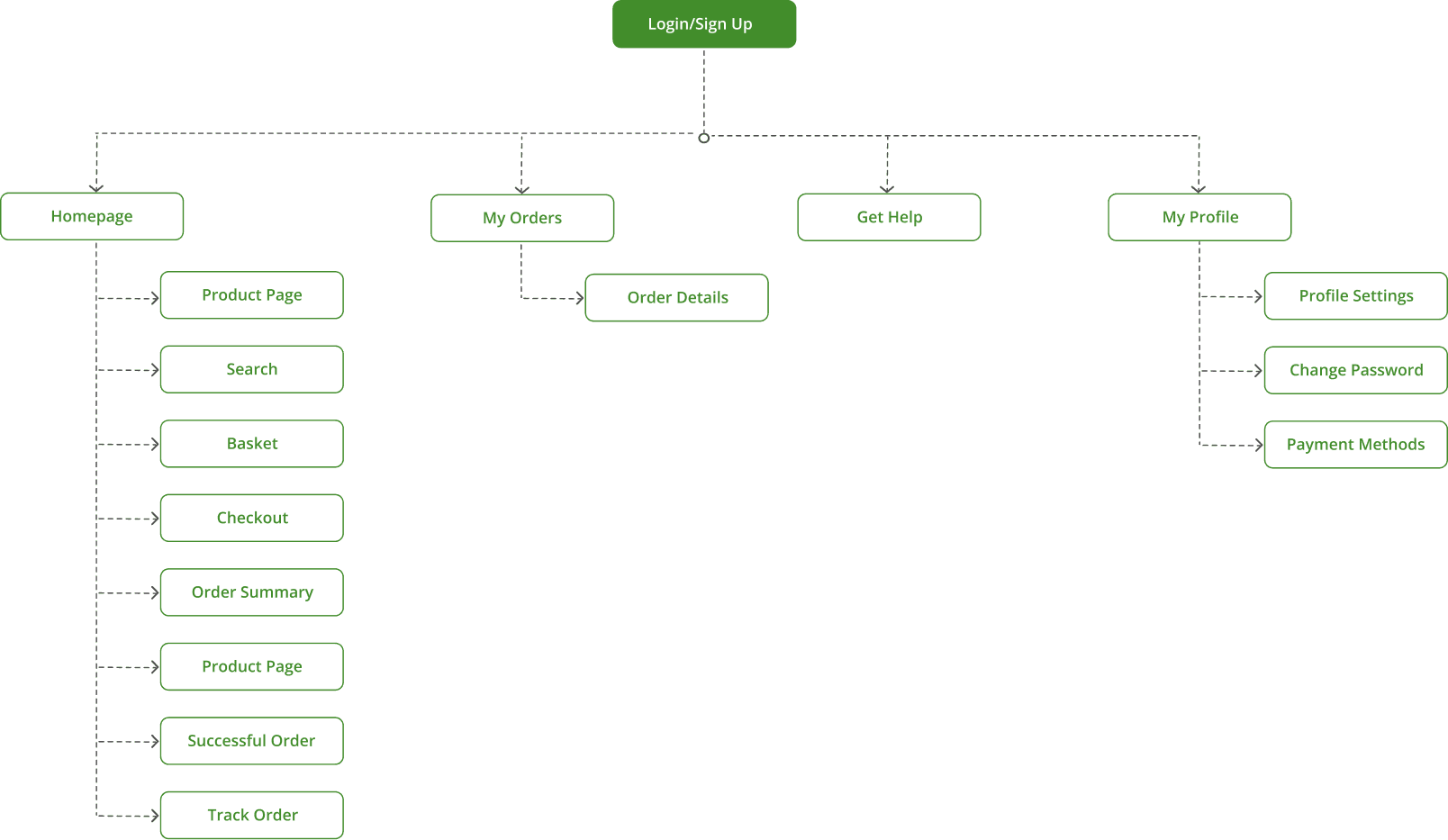
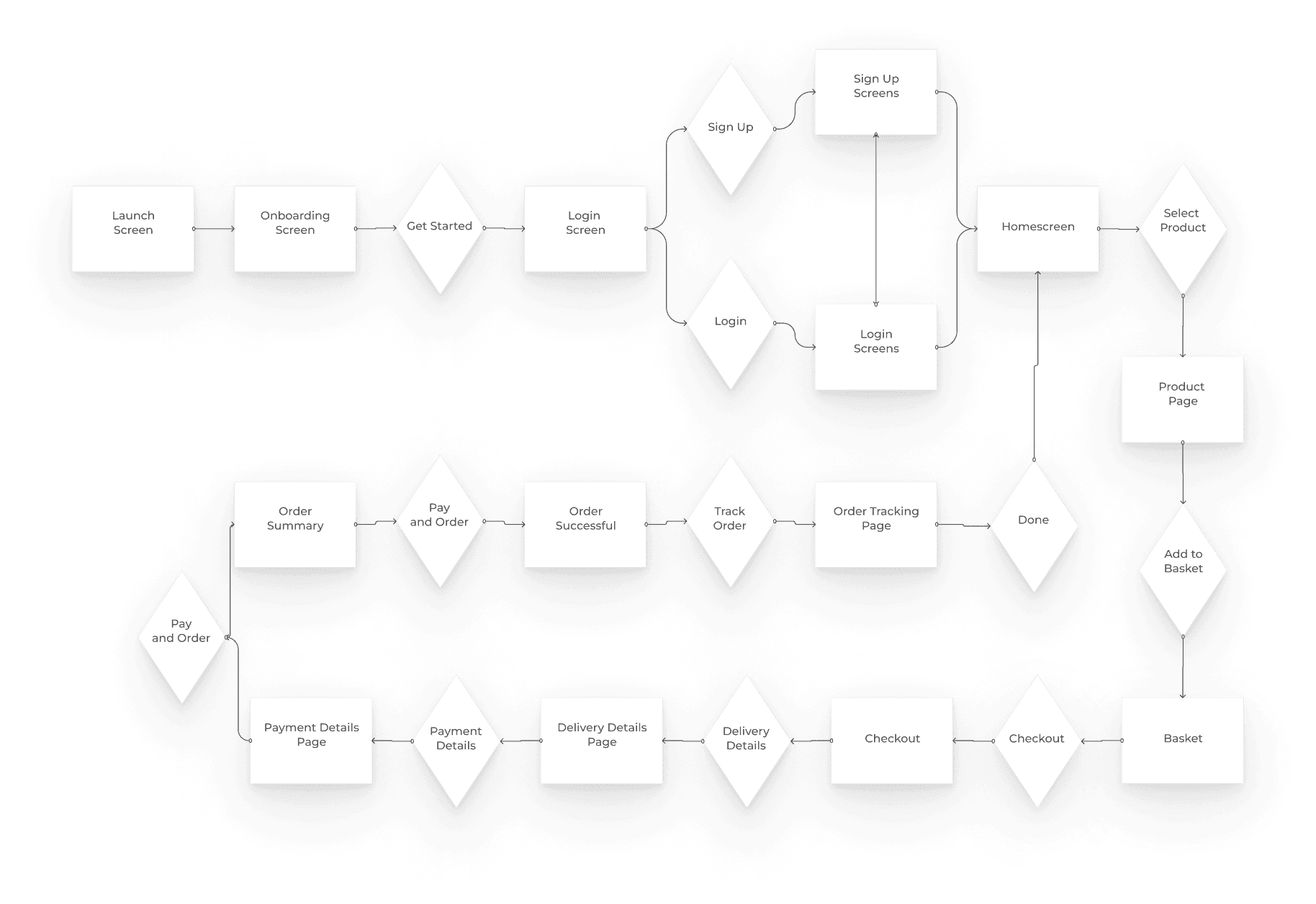
Making deductions from the data collected from the research and insights from the personas and empathy map, I created designs that met both business and user needs.
Sitemap
User Flows
Wireframes
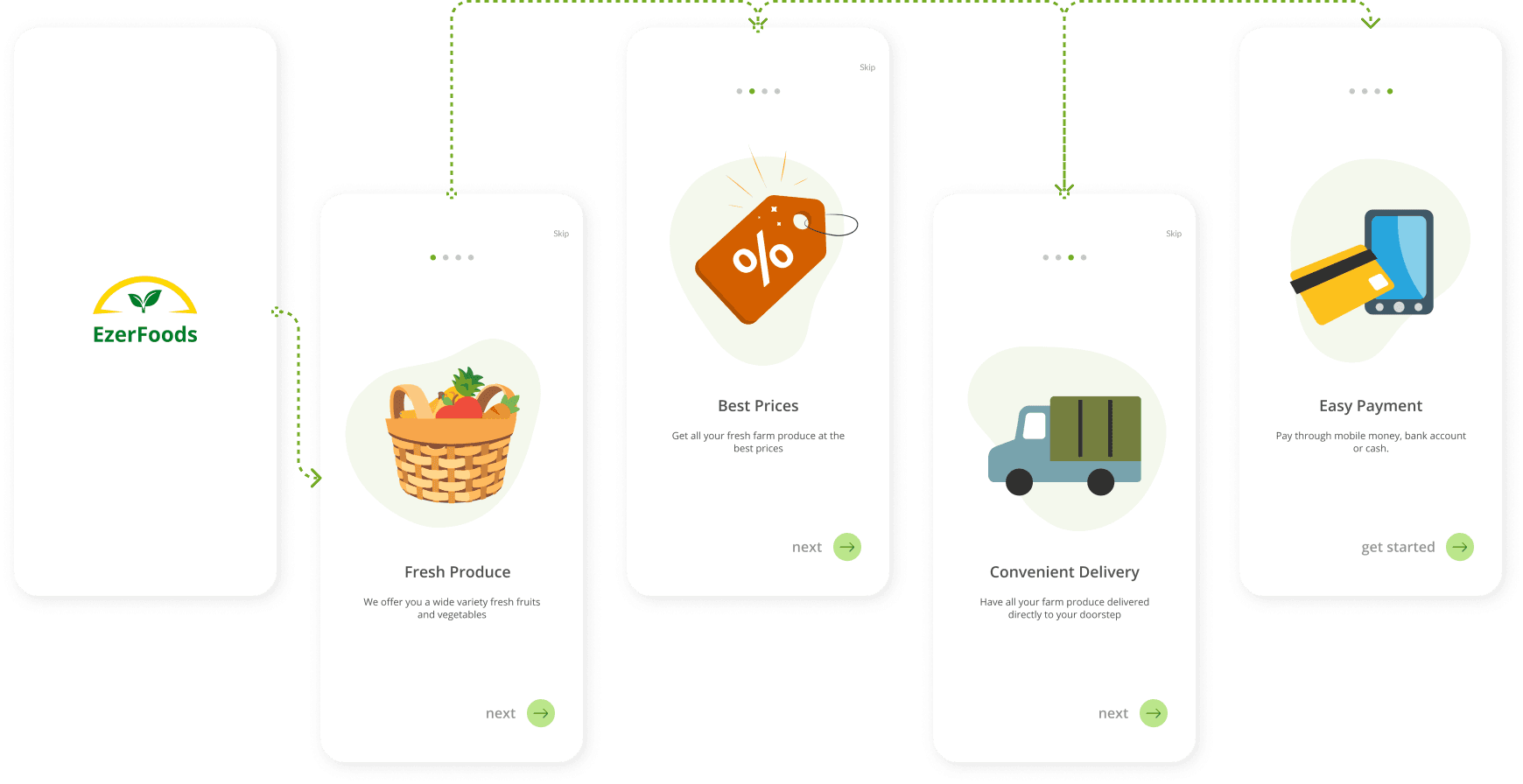
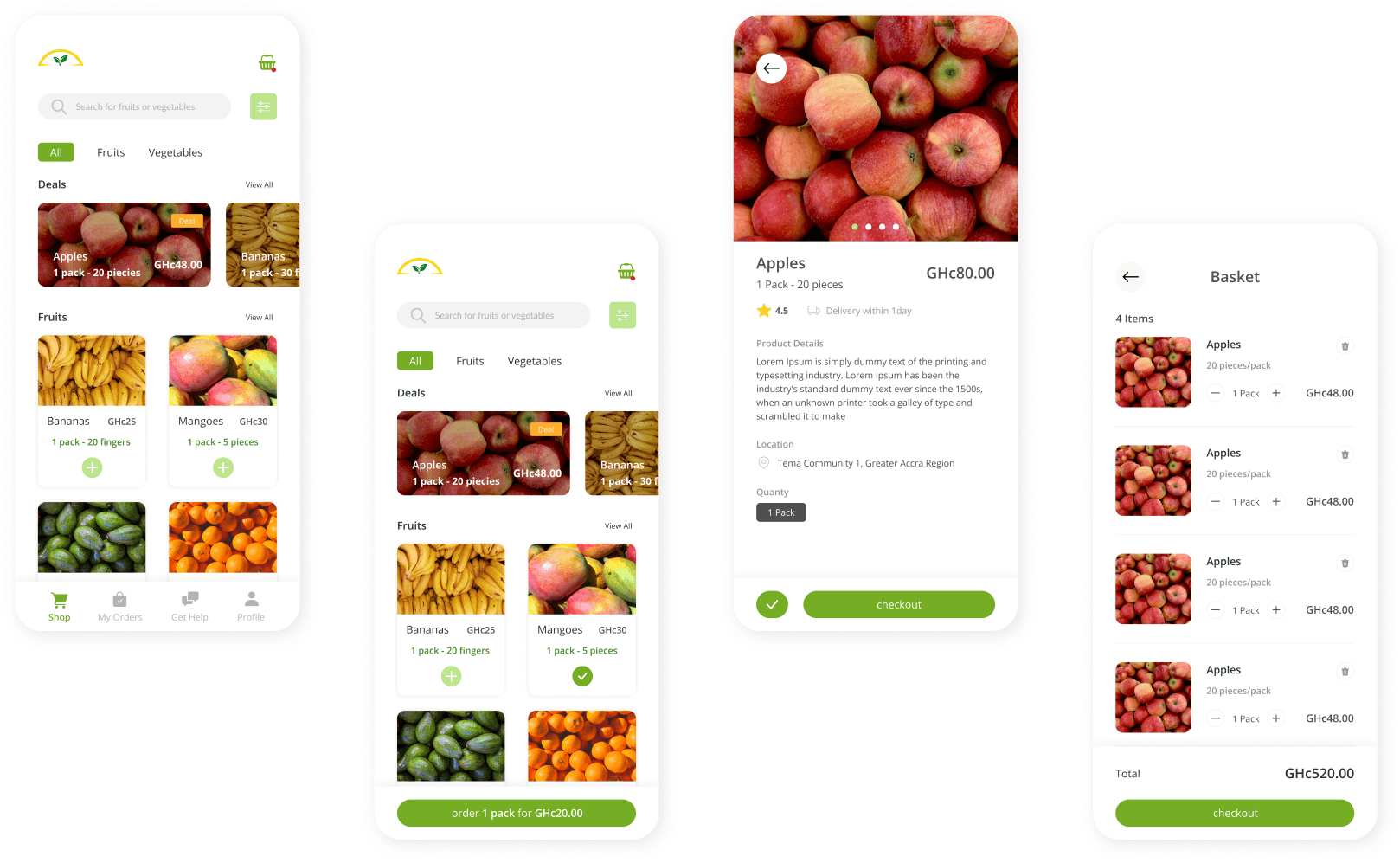
High Fidelity Mockups - Mobile
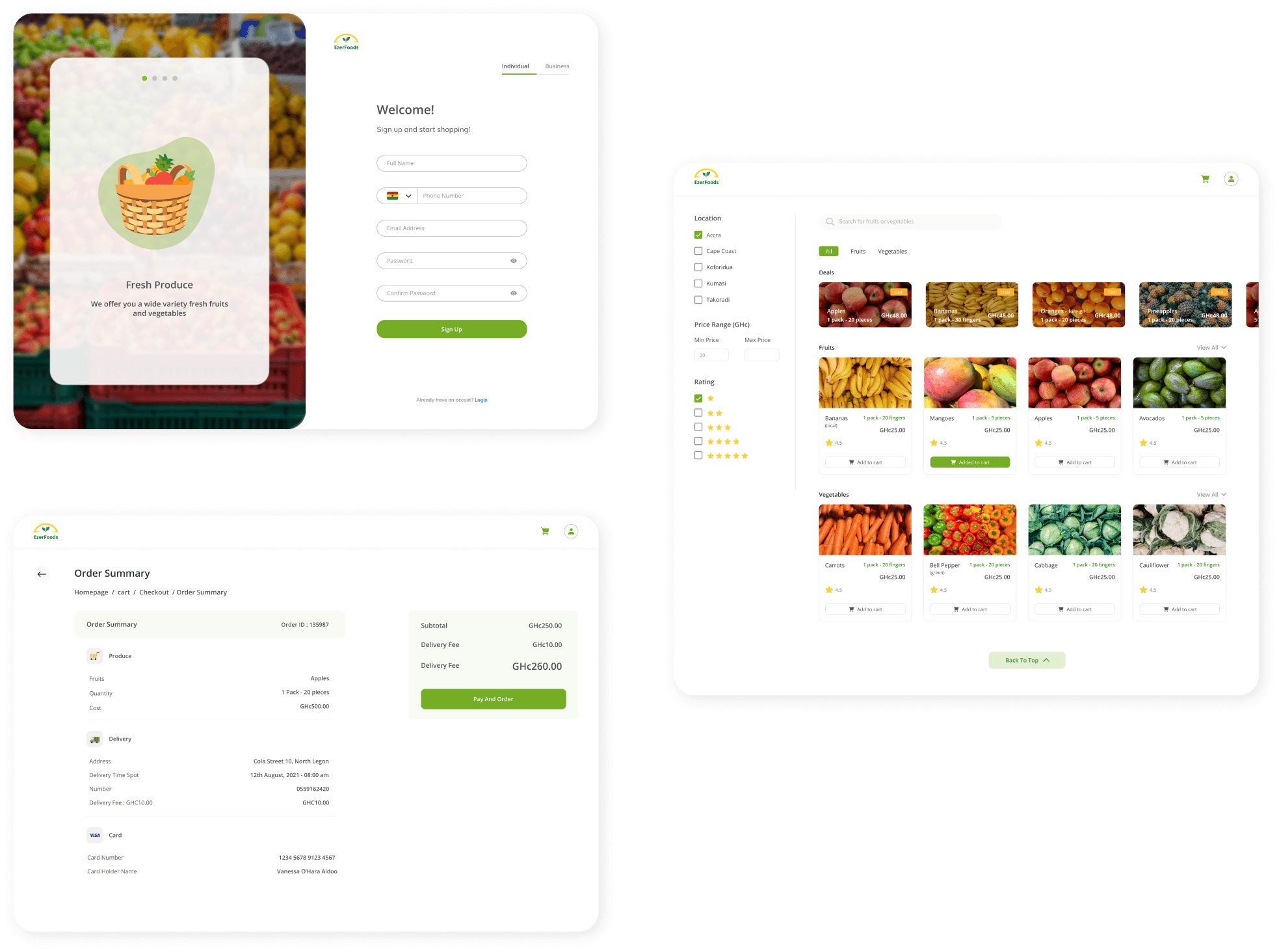
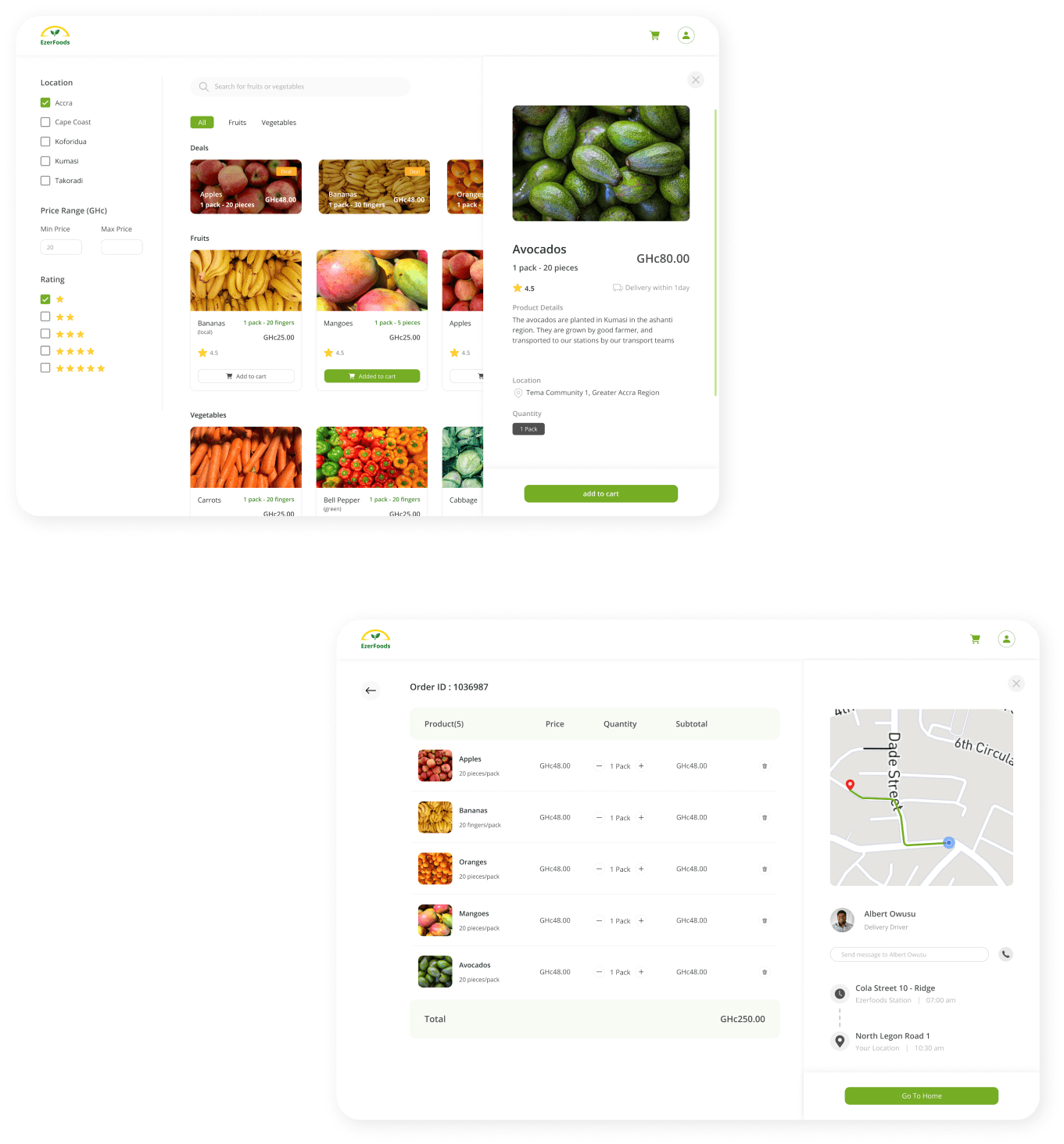
High Fidelity Mockups - Web
Test
I finally tested the designs with real life users that were found in the categories of the personas initially created.
Sample Feedback
| User | Positive | Constructive |
|---|---|---|
Nana Kwasi (Consumer - Student) | The interface looks clean; that gives it a feel of authenticity. I also love how simple it is to navigate. I know what to do next and can move through all the steps easily. Overall, I think this is an app I would use. | I don't like how the produce is measured in kilograms. I don't understand it. That makes it a bit confusing for me. Can I just have a website where I can order from instead of an entire app? |
Sylvia (Retailer - Grocery Shop Owner) | I like the simplicity of the interface. I can buy in bulk on the app; I find that very useful. I also like how simple and fast the sign up is. I like how I'm asked for my digital address. This makes the sign up extra easy for me. | I don't want to download a whole app before I order. I want a website where I can simply place my orders. |
Adwoa Nyamekye (Wholesaler - Wholesale Fruit and Vegetables Seller) | I like the delivery part of the app. I like how I can get my produce delivered to my store house and can even track my delivery. | I would like the option to place my order through a text or a phone call. The mobile app looks simpler than the web app. Can I buy other produce apart from just vegetables and fruits on the platform? |
Changes Made After Testing
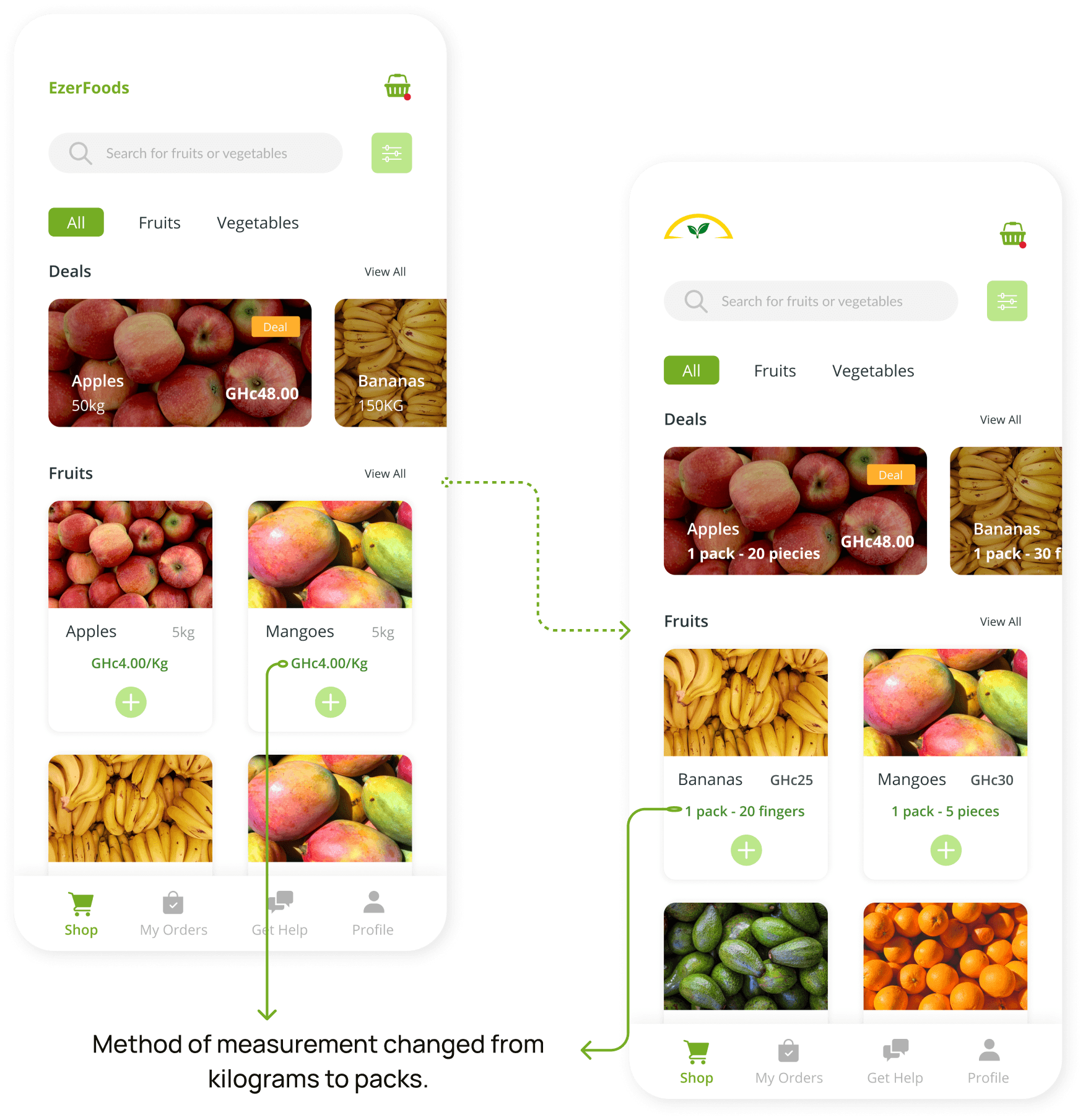
Most of the users I tested with raised the issue of the produce being measured in kilograms alone. This was a major issue because it made it harder for users to visualise exactly how much they would be getting.
So I changed the measurement units to ones that matched the type of product e.g. apples changed from say 5kg to 1 pack, 5 pieces. Bananas also changed from say 2kg to 1 pack, 5 fingers.
Takeaways
Most of the users I tested with raised the issue of the produce being measured in kilograms. This was a major issue because it would have made the product unusable for the market for which it was made.
This highlighted to me the importance of understanding the demographic you are designing for. Different people in different parts of the world have different nuances. They react to things differently; and this affects the kind of products that they will adopt. If a product doesn't yield to their idiosyncrasies, they will not have a good time with it and in the end abandon it.
Most of the users I tested with also raised the issue of wanting just a website to order from. They found downloading an app onto their device to be too much work. They expressed that it seems their phones are being taken over by many apps.
This drew my attention to one of the most important stages of UX design - exploring existing solutions. I learned that it's not always that an app is needed. Sometimes a simple phone call or text would suffice. There are other solutions that already exist out there; existing solutions that are not apps, and as a designer I need to explore those solutions thoroughly before creating any app as a solution.